
Finance

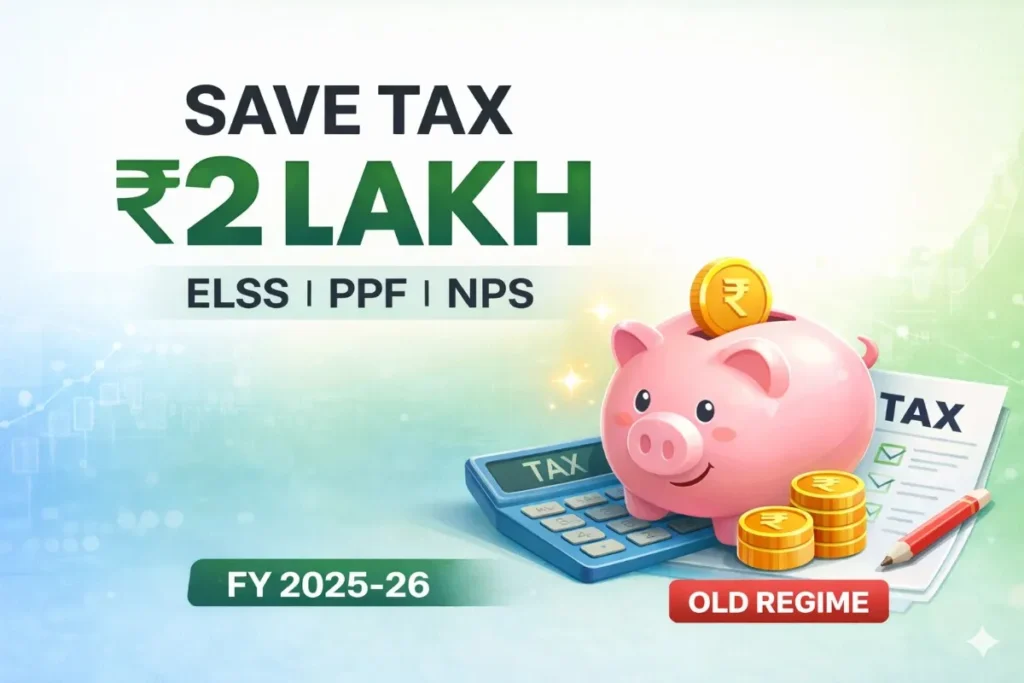
ELSS vs PPF vs NPS comparison chart for 2026 tax saving.

Stop the Tax Leak: How to Shield ₹2 Lakh This Year with ELSS vs PPF, and the NPS 80CD 1B Bonus

Your inbox is likely a graveyard of HR reminders right now. “Investment Proofs Required,” “Deadline Approaching,” “Final Call for Tax Declaration.” If you’ve been hitting ‘delete’ and hoping the problem goes away, you’re about to pay a very expensive “procrastination tax.” In late February 2026, the financial landscape is different than it was even two years ago. We have a new 12.5% tax on long-term gains, a New Tax Regime that is now the “default” for everyone, and a stock market that moves faster than ever. If you’re still sticking with the Old Tax Regime, you have a massive window to protect ₹2 Lakh of your income. Here is the move-by-move strategy to get it done before the March 31 clock runs out. The “New Regime” Trap: Check This First Before you put a single Rupee into any of these funds, look at your latest salary slip. In 2026, the New Tax Regime is the default. If you didn’t explicitly “Opt-Out” at the start of the financial year, your employer is calculating your tax as if Section 80C doesn’t exist. If you are in the New Regime, investing in ELSS or PPF won’t save you a penny in taxes. However, if your deductions (HRA, 80C, Home Loan) exceed ₹3.75 Lakh to ₹4 Lakh, the Old Regime is likely still your winner. Double-check your calculation before you commit your capital. 1. ELSS: The Wealth Builder (3-Year Exit) Equity Linked Savings Schemes (ELSS) remain the top choice for anyone who hates seeing their money “trapped” for decades. It has the shortest lock-in period of any tax-saving instrument at just three years. The 2026 Performance Reality The markets in early 2026 have been volatile, but high-conviction funds have stood their ground. The New “LTCG” Friction You need to be aware of the 2026 tax rules. When you sell your ELSS after three years, your profit is now taxed at 12.5% for any gains above ₹1.25 Lakh. While this is higher than the old 10% rate, it is still the most tax-efficient way to grow your money. No other 80C product gives you equity-like growth with such a short lock-in. Expert Warning: The “T+2” Settlement Trap Don’t wait until March 31 to invest in ELSS. Mutual fund units are only allotted once the money reaches the fund house. With bank servers often crashing on the final day, your payment might clear on April 1st. If that happens, you lose the tax benefit for this year. Aim to finish your ELSS transfers by March 24. 2. PPF: The “Sovereign Shield” (7.1% Tax-Free) If the volatility of the stock market keeps you awake at night, the Public Provident Fund (PPF) is your sanctuary. It is backed by the Government of India, meaning zero risk of default. Why PPF still makes sense in 2026 The government has held the PPF interest rate at 7.1% for the current quarter. While this seems low compared to ELSS, remember the “Triple Exempt” (EEE) status. The “5th of the Month” Masterstroke Here is a tip that even some CAs miss: PPF interest is calculated on the minimum balance between the 5th and the end of the month. Scenario: If you deposit ₹1.5 Lakh on March 6th, you earn ZERO interest for the month of March. If you deposit it on March 4th, you earn the full interest. That 48-hour difference could cost you thousands over 15 years. 3. The NPS Bonus: Unlocking the Extra ₹50,000 This is where you graduate from a basic taxpayer to an expert. Most people stop at the ₹1.5 Lakh limit of Section 80C. That is a mistake. Under Section 80CCD(1B), you can invest an additional ₹50,000 specifically in a National Pension System (NPS) Tier-1 account. This is over and above your 80C limit. The Real-World Payoff If you are in the 30% tax bracket, this one move puts ₹15,600 directly back into your bank account as a refund. Even in the 20% bracket, you save ₹10,400. Where else can you get an immediate 20-30% “return” on your money within 24 hours? NPS in 2026: More Flexible Than You Think The old complaint about NPS was that the money is “locked until 60.” While that’s mostly true, the 2026 rules allow you to withdraw up to 25% for critical milestones (buying a home, wedding, or serious illness). ELSS vs. PPF vs. NPS: The 2026 Decision Matrix Feature ELSS Mutual Funds PPF NPS (Tier-1) Return Profile 15% – 24% (Market) 7.1% (Fixed) 10% – 12% (Market) Lock-in Period 3 Years 15 Years Until age 60 Risk Level High (Equity) Zero (Govt.) Moderate Max Deduction ₹1.5 Lakh ₹1.5 Lakh ₹2 Lakh (Total) Tax on Exit 12.5% (over ₹1.25L) 100% Tax-Free 60% Tax-Free To understand how this fits into the broader budget changes, read our breakdown of the Union Budget FY 2026-27. The “Final Week” Checklist: Avoid the Meltdown Knowing where to invest is only half the battle. Executing it in the “March Panic” is the hard part. 1. The Direct Plan “Profit Secret” When you use apps like Zerodha, Groww, or Kuvera, always ensure you are buying the “Direct – Growth” version of a fund. Avoid “Regular” plans. Regular plans pay a commission to an agent every single year. Over a 10-year period, that 1% commission can eat up nearly 15% of your final wealth. In 2026, there is no reason to pay for a service you can do yourself in three clicks. 2. The Server Crisis is Real Every year on March 30 and 31, bank servers lag. UPI gateways fail. NSDL websites slow to a crawl. If your transaction is “pending” at 11:59 PM on March 31, you lose the deduction. Set a hard deadline for yourself: March 24. 3. KYC and Linking Is your Aadhaar linked to your PAN? Is your mobile number updated with your bank for OTPs? In 2026, the #1 reason for failed investments is a “KYC Mismatch.” Check your status on the CVL-KRA website today to avoid a last-minute rejection. The

Stop the Tax Leak: How to Shield ₹2 Lakh This Year with ELSS vs PPF, and the NPS 80CD 1B Bonus Read More »

ITR Filing 2026

How to : ITR Filing in 2026 (Zero Tax up to ₹12 Lakh)

Filing your Income Tax Return (ITR) or ITR Filing in 2026 is a historic experience. As of February 2026, we are in the transition period where the Income Tax Act, 2025 are replacing the decades-old law. While the rules are getting simpler, the names of forms and the deadlines have changed. Whether you are a salaried professional, a freelancer, or a business owner, this 1200+ word guide is your definitive roadmap for the Financial Year (FY) 2025-26 (Assessment Year 2026-27). 1. The 2026 “New Law” Update: From 1961 to 2025 For over 60 years, India followed the Income Tax Act of 1961. However, the government has now enacted the Income Tax Act, 2025. What this means for you right now: 2. Important Deadlines: The “Staggered” 2026 Calendar One of the most helpful changes in Budget 2026 is the “Staggered Deadline.” To prevent the website from crashing on July 31st, the government has spread out the dates based on your income type. Category of Taxpayer ITR Form Official Deadline Salaried Individuals & Pensioners ITR-1 & ITR-2 31 July 2026 Freelancers & Small Businesses (Non-Audit) ITR-3 & ITR-4 31 August 2026 Audit Cases (Large Businesses) ITR-3 / ITR-5 31 October 2026 Belated Return (With Penalty) Any 31 December 2026 Revised Return (To Fix Mistakes) Any 31 March 2027 Notice that freelancers and small business owners (ITR-3/4) now have an extra month (August 31) compared to salaried employees. This is a significant relief for those managing their own accounts. 3. The “Form Renaming” Era: Know Your New Numbers Under the new rules, the Tax Department is renumbering several common forms to make them more organized. While the names are changing, the purpose remains the same. 4. The Tax Slabs: Is Income up to ₹12.75 Lakh Really Tax-Free? The biggest headline of 2026 is the “Zero Tax” limit. Under the New Tax Regime (which is now the default), the tax-free threshold has been significantly raised. New Tax Regime Slabs (FY 2025-26): How the “Zero Tax” Works Under the New Tax Regime (for FY 2025-26), the government uses a two-step process: Income Bracket Slab Rate Tax Calculation First ₹4 Lakh 0% ₹0 Next ₹4 Lakh (4L to 8L) 5% ₹20,000 Next ₹4 Lakh (8L to 12L) 10% ₹40,000 Total Tax Before Rebate ₹60,000 Minus Section 87A Rebate – ₹60,000 Final Tax Payable ₹0 Standard Deduction: All salaried individuals get a flat ₹75,000 deduction automatically. Section 87A Rebate: If your taxable income (after the deduction) is ₹12,00,000 or less, the government gives you a rebate that makes your tax liability ZERO. The Result: A salary of ₹12,75,000 minus the ₹75,000 deduction equals ₹12,00,000. Under Section 87A, the tax on this is wiped out. 5. Step-by-Step Instructions: How to File Like a Pro Filing yourself is easier than ever because of “Pre-filled Returns.” Step 1: The AIS Check (The “Financial Mirror”) Before you type a single number, download your AIS (Annual Information Statement). This document shows every rupee you earned that the government already knows about—including bank interest, stock dividends, and even large credit card spends. If your ITR doesn’t match your AIS, you will get an automated notice. Step 2: Choosing Your Form Step 3: Online Filing & E-Verification 6. Special Insights for Freelancers & Creators If you run a blog or a design firm, the Presumptive Taxation Scheme (Section 44ADA) is your best friend. 7. Why Filing Matters (Beyond Taxes) Even if your income is below the taxable limit (Nil Return), you should still file. 8. Jargon Buster: 2026 Edition To make this easy for everyone, here is a quick translation of common tax terms: Old Term / Hard Word Simple 2026 Meaning Assessment Year (AY) The “Filing Year” (Currently 2026-27). Financial Year (FY) The “Earning Year” (April 2025 – March 2026). Standard Deduction A “Free Discount” of ₹75,000 for salaried people. Tax Rebate (87A) A “Full Refund” on tax for income up to ₹12 Lakh. Belated Return A “Late Entry” filing done after the deadline. Don’t Wait for the Deadline The shift to the Income Tax Act, 2025 and the renaming of forms like Form 130 and Form 168 might seem confusing at first, but the goal is a cleaner, faster system. By understanding the new staggered deadlines—July 31 for salary and August 31 for freelancers—you can plan your finances without stress. Key Takeaway: Always check your AIS first. It is the single most important document in the 2026 tax ecosystem. Quick Checklist for AY 2026-27: Official Source Links:

How to : ITR Filing in 2026 (Zero Tax up to ₹12 Lakh) Read More »

union budget 2026-27

What is the Union Budget FY 2026-27?

Have you ever wondered how your parents decide how much money to spend on toys, chocolates, and your school books? They make a “Home Budget.” Just like that, the Government of India makes a big plan every year called the Union Budget FY 2026-27. On February 1, 2026, Finance Minister Nirmala Sitharaman shared this big piggy-bank plan with the whole country. Let’s look at the “cool stuff” and the “important changes” in a way that’s easy to understand! Big Wins for Schools and Students The government wants every child in India to be super smart and ready for the future. This year, they have kept aside a whopping ₹1.39 lakh crore just for education! Faster Trains and Cleaner Travel Do you like traveling by train? The Union Budget FY 2026-27 is making train rides even better and faster. The “Pocket Money” for the Country How much is the government planning to spend? Here is a quick look at the big numbers in our Union Budget FY 2026-27 table: What is it? The Amount (Estimated) What it means in simple words Total Spending ₹53.5 Lakh Crore The total “Piggy Bank” for the whole country. Education Budget ₹1.39 Lakh Crore Money for schools, teachers, and labs. Infrastructure (Capex) ₹12.2 Lakh Crore Money for roads, bridges, and big buildings. Fiscal Deficit 4.3% Like a small “loan” the country takes to grow faster. What about Mom and Dad’s Taxes? You might hear your parents talking about “Income Tax.” Here is what changed for them: Future Tech and Healthy India The Union Budget FY 2026-27 is also looking at how to make India a leader in technology. Summary for Young Leaders The Union Budget FY 2026-27 is all about three big duties (Kartavyas): By focusing on schools, technology, and faster travel, the government is trying to make India a “Viksit Bharat” (Developed India) by the time you grow up!

What is the Union Budget FY 2026-27? Read More »

high-yield investment

7 Best High-Yield Investment Options in India (2026): A Personal Roadmap to 12%+ Returns

In 2026, this “Inflation Trap” has only tightened. If you are still relying on traditional savings accounts, you aren’t just standing still—you’re falling behind. Over the last two years, I’ve pivoted my strategy toward high-yield investments. This blog isn’t a theory from a textbook; it’s a look inside my personal portfolio and the lessons I’ve learned while balancing business and wealth. The Role of Inflation in 2026 “Investing is no longer just about growing your wealth; in 2026, it is about protecting it. With the global economy witnessing shifts in supply chains and energy costs, inflation in India remains a key factor for every investor to consider. A ‘High-Yield’ investment is one that not only offers double-digit returns but also beats the annual inflation rate, which typically hovers around 5-6%. If your money is sitting in a traditional savings account earning 3%, you are technically losing purchasing power every year. Therefore, shifting towards diversified high-yield assets is a necessity for anyone looking to maintain their lifestyle in the coming decade.” The Day I Realized My Savings Were Shrinking It was a humid afternoon in Bhopal back in 2024. I was looking at the bank balance for Social Unicorns, feeling proud of our growth. But when I ran the numbers against the rising costs of software and living, I realized something terrifying: My money was growing at 5%, but my expenses were rising at 8%. Strategy for High-Yield Investment 1. REITs (Real Estate Investment Trusts): The 2026 Liquidity Revolution For a long time, real estate in India meant “black money” and “endless paperwork.” But as of January 1, 2026, SEBI’s reclassification of REITs as equity instruments has changed the game. My Personal Take I used to think I needed ₹1 Crore to own a piece of a Gurgaon office park. Now, I invest ₹5,000 a month into REITs like Brookfield or Embassy. REITs and InvITs: The New-Age Real Estate Strategy “One of the most exciting high-yield trends for Indian investors in 2026 is Real Estate Investment Trusts (REITs) and Infrastructure Investment Trusts (InvITs). Traditionally, real estate required crores of investment, but with REITs, you can own a share of premium commercial properties for as little as ₹500. These trusts are mandated to distribute 90% of their net cash flow to unit-holders as dividends, making them an excellent source of passive income. As India’s infrastructure expands under the ‘Gati Shakti’ initiatives, InvITs specifically are offering yields that often outperform corporate bonds, providing a perfect balance of stability and growth.” 2. P2P Lending: Navigating the New RBI Guardrails P2P (Peer-to-Peer) lending used to be the “Wild West.” However, the RBI’s 2025-26 updated guidelines have prohibited platforms from “guaranteeing” returns or offering liquidity options. The Lesson I Learned Early on, I put too much into a single “High Return” bucket and saw a 4% default rate. Today, I use the “Fractional Lending” approach. 3. Corporate Fixed Deposits: The “AAA” Safety Net While SBI might offer you 7.1%, companies like Bajaj Finance or Mahindra Finance are hitting the 8.2% to 8.5% mark in early 2026. When I was setting up Design Brix, I needed a place to park our “tax reserve” for 6 months. I chose a AAA-rated Corporate FD. 4. Sovereign Gold Bonds (SGB): The 2026 Hedge Gold prices have been volatile, but SGBs remain the smartest way to hold the yellow metal. 5. Covered Bonds: The Institutional Play for Retailers This is a relatively new addition to my 2026 portfolio. Covered bonds are like regular bonds but are backed by a “cover pool” of assets (usually gold loans or home loans). 6. Smallcase: Investing in “Themes,” Not Just Stocks At Social Unicorns, we focus on trends. I apply the same logic to my stocks. Instead of picking individual companies, I use Smallcases. My 2026 Focus Themes: 7. Dividend Aristocrats: The Passive Income King Finally, I keep a portion of my portfolio in PSU and blue-chip stocks (like ITC or Coal India) that pay out consistent dividends. In 2025, my dividend income actually paid for our office rent for two months! ⚠️ Critical Risk Disclaimer Before you jump in, remember: I am a business owner sharing my journey, not a SEBI-registered investment advisor. High-yield investment carries higher risks than traditional bank deposits. Always conduct your own due diligence or consult a certified financial planner. Never invest money you cannot afford to lose in the short term. Risk Management: Don’t Put All Your Eggs in One Basket “High yield often comes with high risk. While the allure of 15-18% returns from P2P lending or small-cap funds is strong, these assets can be volatile. At Social Unicorns, we advocate for the ‘Core and Satellite’ strategy. Keep 70% of your capital in ‘Core’ safe assets (like Index Funds or Gold) and only allocate 30% to ‘Satellite’ high-yield options. This way, even if one sector faces a downturn in 2026, your overall portfolio remains resilient. Always conduct thorough due diligence or consult a SEBI-registered financial advisor before committing large capital.” Understanding the Taxation on High-Yield Returns “It is important to remember that ‘Gross Returns’ are not ‘Net Returns.’ In India, the tax treatment of your investments can significantly impact your final wealth. For instance, short-term capital gains (STCG) on equity are taxed differently compared to interest earned from P2P lending or Corporate FDs, which are added to your income tax slab. If you are in the 30% tax bracket, a 12% yield might effectively become 8.4% after taxes. Therefore, smart investors in 2026 are focusing on tax-efficient instruments like ELSS or long-term equity holdings to ensure that their high-yield journey isn’t cut short by the taxman.” My High-Yield Investment 2026 Roadmap If I had to start from zero today in Bhopal, I would: Wealth isn’t built overnight; it’s built by staying in the game. High-Yield Investment Apps Recommendation: Zerodha, Groww Stay Tuned for High-yield Investment Financial Updates!

7 Best High-Yield Investment Options in India (2026): A Personal Roadmap to 12%+ Returns Read More »